See It Before It’s Built
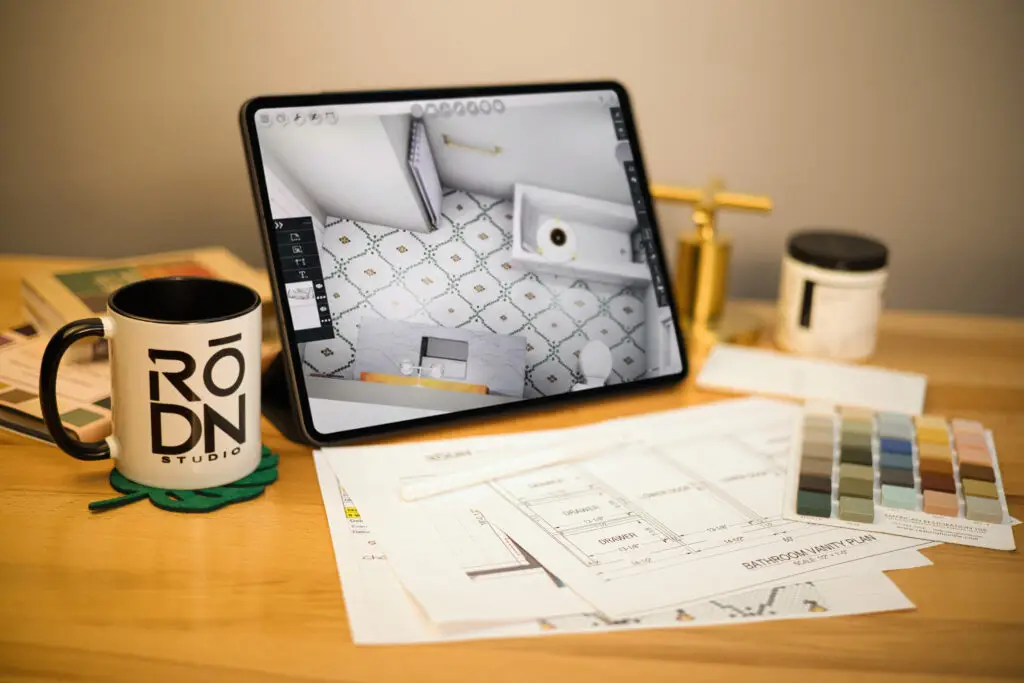
As part of my design process, I use 3D to help clients (and myself) see a design more clearly. I use it as a working tool to make decisions, refine dimensions, and test ideas quickly.
When 2D Isn’t Enough
A 2D floor plan is usually enough to understand the basic layout and flow. But once decisions start involving fixtures, finishes, cabinetry, furniture, and light, it gets much harder to picture everything accurately. Viewing a 3D model makes those decisions easier to see and understand.
Our memories also tend to fill in gaps in unhelpful ways. We might be picturing how something looked in a catalog or showroom, not how it will actually sit in our home, with our layout, proportions, and constraints. Seeing a design before it’s built helps reveal missed opportunities and potential issues early, when adjustments are still easy to make.
Modeling the Existing Space
For renovation projects, I start by documenting the existing structure and creating a model of what’s there before any changes are made.
During the design phase, I often work with both 3D models and 360 photos of the space. This allows us to move through the room, look up at ceilings, down at floors, and check the locations of key elements without guessing. This is especially helpful for out of town clients, who can understand the space clearly without needing to be on site.
Studying the Details
Beyond modeling rooms and layouts, I also use 3D to study individual elements like custom cabinetry, built-ins, lighting, and other architectural details. Modeling these pieces helps dial in proportions and understand how they relate to the surrounding space.
Materials and Finishes
A 3D model is just one tool, not the whole story. I develop material and finish palettes with physical samples you can touch and feel, and I build mood boards and storyboards as the design evolves. This helps connect finishes, textures, colors, and details before anything is finalized.
See It Before It’s Built
As part of my design process, I use 3D to help clients (and myself) see a design more clearly. I use it as a working tool to make decisions, refine dimensions, and test ideas quickly.
When 2D Isn’t Enough
A 2D floor plan is usually enough to understand the basic layout and flow. But once decisions start involving fixtures, finishes, cabinetry, furniture, and light, it gets much harder to picture everything accurately. Viewing a 3D model makes those decisions easier to see and understand.
Our memories also tend to fill in gaps in unhelpful ways. We might be picturing how something looked in a catalog or showroom, not how it will actually sit in our home, with our layout, proportions, and constraints. Seeing a design before it’s built helps reveal missed opportunities and potential issues early, when adjustments are still easy to make.
Modeling the Existing Space
For renovation projects, I start by documenting the existing structure and creating a model of what’s there before any changes are made.
During the design phase, I often work with both 3D models and 360 photos of the space. This allows us to move through the room, look up at ceilings, down at floors, and check the locations of key elements without guessing. This is especially helpful for out of town clients, who can understand the space clearly without needing to be on site.
Studying the Details
Beyond modeling rooms and layouts, I also use 3D to study individual elements like custom cabinetry, built-ins, lighting, and other architectural details. Modeling these pieces helps dial in proportions and understand how they relate to the surrounding space.
Materials and Finishes
A 3D model is just one tool, not the whole story. I develop material and finish palettes with physical samples you can touch and feel, and I build mood boards and storyboards as the design evolves. This helps connect finishes, textures, colors, and details before anything is finalized.