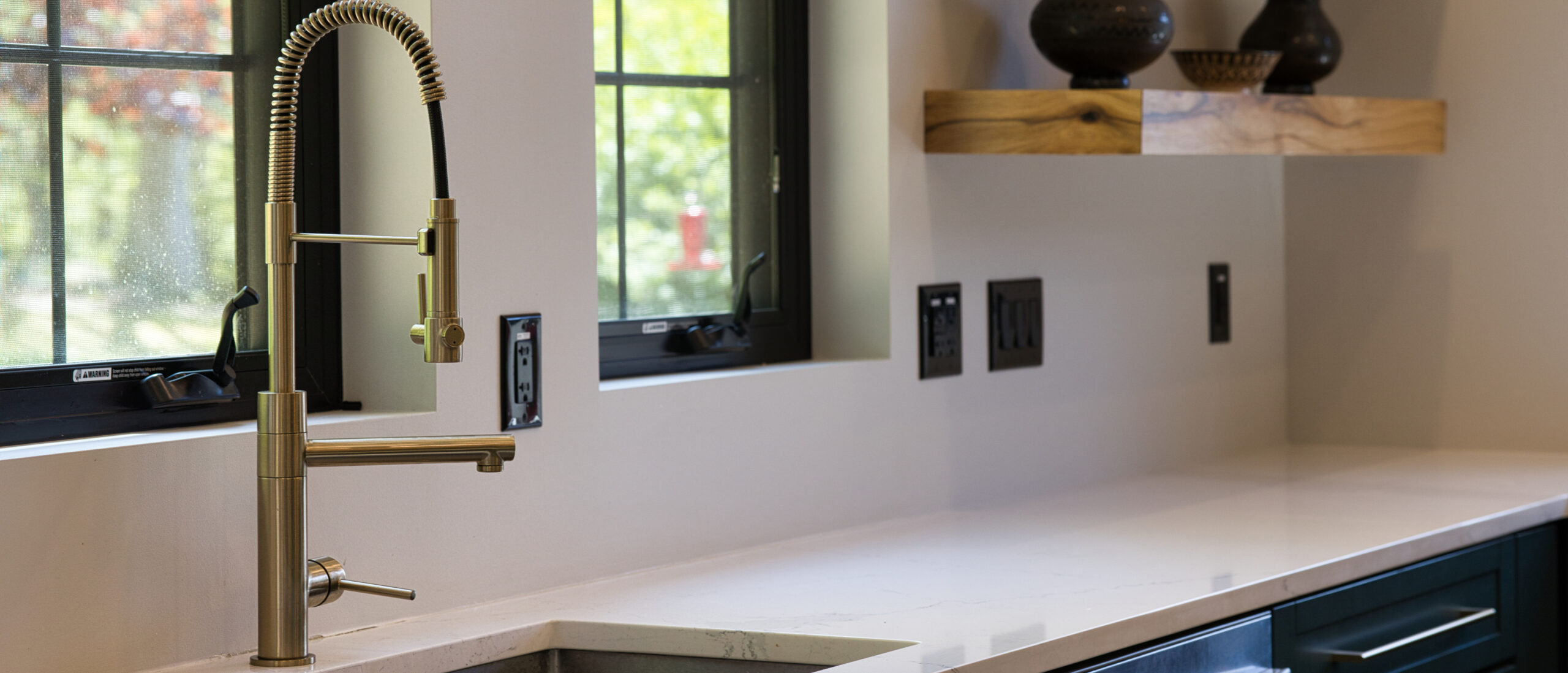
A kitchen renovation in an older home is an opportunity to look beyond the new cabinetry and finishes. Often, other building systems need attention or would benefit from an upgrade. Addressing problems now can help you avoid costly repairs and disruption to your finished kitchen later.
Here are five common things to check or have inspected by a professional. Identifying needed repairs or upgrades early can help you make informed planning and budgeting decisions.
1. Check your plumbing
If your home still has aging cast-iron drains or galvanized water lines, address them while the room is open. Replacing deteriorated piping during the renovation can help prevent future leaks, blockages and damage to your new kitchen.
2. Check your electrical wiring
Older kitchens were rarely wired to power today’s appliances and devices. Make sure your budget includes evaluating the existing wiring and bringing circuits and outlets up to current requirements before new cabinetry and finishes are installed.
3. Check walls and floors for plumb and level
Minor variations are normal, especially in older homes. Larger slopes or leaning walls can lead to costly adjustments to cabinetry, counters and trim. Depending on the severity, straightening a wall or leveling the floor first may produce a better result at a lower overall cost.
4. Does your cooking surface vent to the outdoors?
Many kitchens have a hood or microwave above the cooking surface, but some simply recirculate air through a charcoal filter. When feasible, venting outdoors offers better performance by exhausting heat, moisture, smoke, grease and cooking odors. Ask your designer early how the necessary ductwork can be routed through your space.
5. Evaluate doors, windows and trim
A kitchen renovation may be the right time to repair a failing window, improve how people move through the room, or reconsider an awkward doorway or opening. Updating doors, casings and trim at the same time can also create a more cohesive finished space.